The Silent Sabotage: Why Roof Moss and Algae Are Costing You Thousands
Most homeowners see a bit of green on their roof and think, "I'll get to that next summer." The problem? Moss and algae don't wait for your schedule. By the time you can see them clearly from the driveway, the damage is already happening under the surface. They aren't just sitting on your roof; they are eating it.
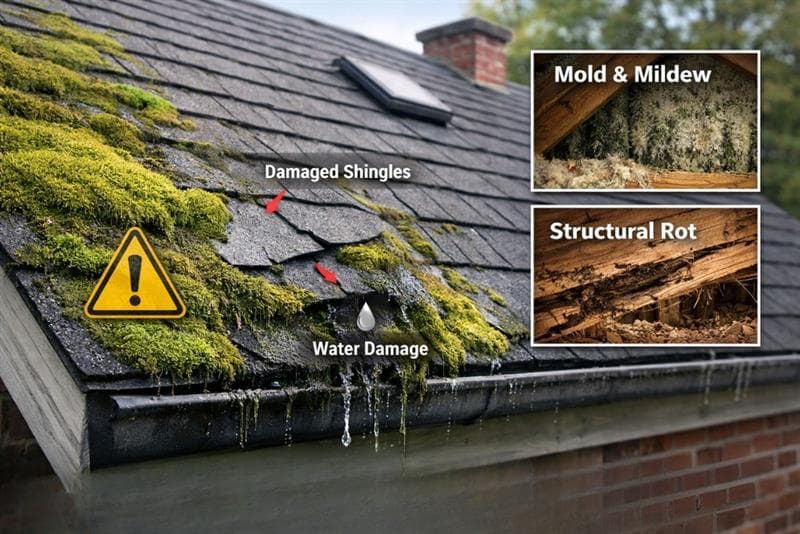
Moss: The Structural Sponge
Unlike grass, moss doesn't have traditional roots. Instead, it anchors itself into your shingles. As it grows, it lifts the edges of the shingles, breaking the seal that keeps your home watertight.
Even worse, moss acts like a heavy, wet sponge. It holds onto moisture for weeks, keeping your roof in a constant state of dampness. This leads to:
- Rotting wood in the decking below.
- Mold growth in your attic.
- Shingle decay as the granules are eaten away.
Algae: The "Gloeocapsa Magma" Problem
Those black streaks that look like dirt or soot? That's likely Gloeocapsa Magma, a hardy type of algae. It feeds on the limestone filler used in modern shingles.
As the algae eats the limestone, your shingles become brittle, lose their ability to reflect UV rays, and eventually crumble. You aren't just losing curb appeal; you're losing the very material that protects your family from the elements.
The Insurance Trap
This is the danger many people don't realize until it's too late. Many insurance companies now use drones or high-resolution photos to inspect properties. If they see significant moss or algae growth, they may cancel your policy or refuse to renew it, citing "lack of maintenance."
A $500 cleaning today could prevent a $15,000 roof replacement or a denied insurance claim tomorrow.
Don't DIY the Destruction
Whatever you do, stay away from the pressure washer. Blasting your roof with high-pressure water is the fastest way to strip away your shingles' protective granules and void your warranty.
True roof health requires a "soft wash" approach using specialized, eco-friendly solutions that kill the root systems of moss and algae without damaging the structure.
Stop the Spread Today
Your roof is the most expensive "shield" your home has. Don't let a tiny plant compromise your biggest investment. If you see green, it's time to act.
Is your roof under attack? Contact us today for a professional inspection and a safe, effective soft-wash treatment.